alien & sedition.
Monday, July 02, 2007
Mitt: Fatcats' Favorite
The article, which is drawn from a questionnaire focusing on taxes, health care, energy, and other issues, is worth a read for those looking to get an idea where the candidates stand on economic issues (though you need to be a subscriber to get the full version). And it's worth noting that, if you believe that what's good for wealthy investors is good for America, Mitt's your man: he wants to abolish the estate tax, thus relieving super-rich heirs of the worry that they might have to give up the beach house in St. Tropez; he favors maintaining the Bush administration's low tax rate on capital gains and dividends, and he offers a vague promise to reduce marginal income tax rates across the board.
Of the rest of the candidates, Rudy Giuliani -- who has been seeking to burnish his supply-side credentials -- scores second, while John Edwards meets with disdain for daring to suggest that nurses working overtime should not be taxed at a higher rate than millionaire hedge fund managers.
Cross-posted at The Right's Field.

Why doesn't anybody use the term "fatcat" anymore? Anyway, the fatcats over at Barron's have judged the Rs and the Ds, and declared Mitt Romney "best Republican candidate [and the best overall] for stocks, bonds and the economy" (they like Richardson best of the Democrats).
The article, which is drawn from a questionnaire focusing on taxes, health care, energy, and other issues, is worth a read for those looking to get an idea where the candidates stand on economic issues (though you need to be a subscriber to get the full version). And it's worth noting that, if you believe that what's good for wealthy investors is good for America, Mitt's your man: he wants to abolish the estate tax, thus relieving super-rich heirs of the worry that they might have to give up the beach house in St. Tropez; he favors maintaining the Bush administration's low tax rate on capital gains and dividends, and he offers a vague promise to reduce marginal income tax rates across the board.
Of the rest of the candidates, Rudy Giuliani -- who has been seeking to burnish his supply-side credentials -- scores second, while John Edwards meets with disdain for daring to suggest that nurses working overtime should not be taxed at a higher rate than millionaire hedge fund managers.
Cross-posted at The Right's Field.
Labels: Barron's, economic conservatives, Mitt Romney
¶ Posted by Paul Curtis 11:37 AM 0 comments Friday, May 18, 2007
Heterodoxies, Real and Imagined
At any rate, E.J. Dionne has a column today that could almost be a stand-in for an A&S post, except that his thesis is a little bit flawed. Dionne discusses the various heresies of the various GOP presidential candidates (Rudy on abortion, Huckabee on taxes, McCain on campaign finance laws) and sees it as a symptom of the breakdown of conservative orthodoxy:
It would take more than just the collapse of the religious right to bring down the conservative ideological edifice. Dionne's one example of deviation from an economic conservative line consists of Huckabee's defense of his own record on taxes. But I think that what's going on here is something rather different than what Dionne sees.
Christopher Orr's critique of Dionne's article is instructive:
But here's the nuance that I think both Dionne and Orr miss. Giuliani's refusal to submit to the abortion litmus test is substantively different -- very different -- than any of the other "heresies" under consideration here. The issue is precisely what Dionne aluded to when he pointed out (as I did the other day) the waning power of the Christian right.
There is, on a general level, a crisis in the conservative movement. At the same time, though, it isn't a question of anybody "rethinking" anything. The chaos on the right is operating differenly in a theoretical fashion than it is in a practical fashion. That is, nobody can sort out to what extent the crisis is a matter of discredited ideas, and to what extent it's a matter of weakened institutions.
The difference between the social conservatives on the one hand, and the economic conservatives on the other, is crucial here. The various candidates continue to pander mindlessly to both sides because they're mostly too blinkered and mediocre to notice that, suddenly, the enforcers of some conservative orthoxies are a lot weaker than others these days.
Here's what I think, tentatively, is beginning to happen: Rudy Giuliani's break with the anti-abortion line is, as I've said, the only truly heterodox move by a major Republican candidate in a long time. The economic conservatives are happy enough with Rudy, and they see him as the most electable Republican -- probably the only electable Republican -- next fall. The conservative intellectuals, who mostly stick with the economic side of the movement (since that's the side that finances them, and since they generally aren't the types to sign chastity pledges themselves), also dig Rudy for what they see as his war and terror cred. And the economic conservatives and the intellectuals perceive that, suddenly, it's possible for a candidate to leave the whole abortion thing behind. So if that's what they think he needs to do, tactically, they'll support him.
What this means is that, after several years now of complaining about the effects of the Christian right on their party, economic and intellectual conservatives are finally beginning to leave the fundamentalists behind. And they seem to be positively giddy about it.
It's still very early and difficult to forecast this stuff. But I'll try to document it going forward.
Here's the grand irony, though. As the rise of the moderate evangelicals saps the enforcement power of the social conservatives on Republican candidates (even while drones like Mitt Romney fail to see it), the economic right, by default, becomes more powerful within the movement. Thus Rudy, who rejects the core social conservative tenet, is still a frontrunner, while a skilled politician like Huckabee is hobbled for being insufficiently zealous about tax cuts.
But while Rudy could somehow coast to the White House on the hero-worship factor alone, it's Huckabee who represents the more potent forumula for a future Republican party. I would bet my cats that a formula of moderate-conservative religiosity (with a self-help sheen) plus a willingness to acknowledge a positive role for government is much more appealing to the American public over the long run than tough-guy pseudo-libertarianism. Even if we end up with a President Rudy -- especially if we end up with a President Rudy -- we may be watching the conservative movement destroy itself.
I know it's been a light couple of weeks here at A&S, and to be honest, I'm unlikely to be doing multiple posts every day for the foreseeable future. But it'll still be regular (should be around one a day, maybe two), and hopefully we'll maintain our reputation for sterling quality control (er, do we have a reputation for that?).
At any rate, E.J. Dionne has a column today that could almost be a stand-in for an A&S post, except that his thesis is a little bit flawed. Dionne discusses the various heresies of the various GOP presidential candidates (Rudy on abortion, Huckabee on taxes, McCain on campaign finance laws) and sees it as a symptom of the breakdown of conservative orthodoxy:
One dynamic forcing Republicans to new ground is the failure of the Bush presidency. This is leading liberals to insist that President Bush's tenure proves conservatism doesn't work, and conservatives to insist that Bush was never a real conservative (something they didn't say when his poll ratings were high).I agree with Dionne's last assertion, and on a general level I think he is seeing the same crisis in the conservative movement that I'm seeing, but I don't think he's getting the nuances quite right - and they're important nuances.
Something similar happened to Jimmy Carter in 1980 when conservatives attacked him as a liberal while liberals disowned him. Carter's defeat by Ronald Reagan was followed by an extended liberal nervous breakdown. Now it's conservatives who are panicking.
But Republicans also know in their guts that their old axioms don't work anymore because their constituencies are breaking up.
The obituaries this week for the Rev. Jerry Falwell often took the form of elegies for the entire religious right. Younger and suburban evangelicals may be more or less conservative, but they do not share the ideological fervor of the Moral Majoritarians. These new evangelicals care about issues other than abortion and gay marriage. They yearn, along with almost everyone else, for problem-solving competence. [...]
If conservative ideologues were the dominant force in Republican primary politics, Giuliani would not be at the top of the pack, Gilmore the Pure would be doing better, and McCain and Huckabee would not be placing bets on pragmatism and political reconciliation. Yes, every Republican still wants to be called a "conservative." But they are all feeling pressure to pour new wine into that old vessel because it's almost empty. And Democrats beware: A less orthodox Republican Party would be a lot more popular.
It would take more than just the collapse of the religious right to bring down the conservative ideological edifice. Dionne's one example of deviation from an economic conservative line consists of Huckabee's defense of his own record on taxes. But I think that what's going on here is something rather different than what Dionne sees.
Christopher Orr's critique of Dionne's article is instructive:
[T]he idea that the heresies (most of them minor) on display in South Carolina somehow represent the GOP candidates' efforts to rethink party ideology seems, well, wrong. For the most part, they're exactly what they appear to be: The candidates' efforts to deal with (and, wherever possible, minimize) their inconvenient political baggage.Let's consider Huckabee again. The former Arkansas governor is saying what he's saying about taxes precisely because he's on the defensive against enforcers of conservative orthodoxy. That's why he emphasizes the "94 tax cuts" claim; his refusal to renounce all tax increases comes across more as a self-defense strategy than anything else -- an attempt to avoid complete capitulation, which would make him look weak. In fact, I think Huckabee would have a sound strategy for success in a general election if he were to more strongly emphasize his disagreements with economic conservative orthodoxy, but as he well knows, the Club for Growth won't let him.
As Dionne notes, Huckabee may have raised taxes as governor of Arkansas, but he still pitches himself as a fiscal conservative who cut taxes "94 times." Giuliani has only embraced his pro-choice past because his earlier efforts to finesse it away were such an abject failure. As for Romney, he defended a federal role in education because he was specifically asked whether, in light of his many convenient ideological conversions (on abortion, gay rights, etc.), he'd had any conversions that might hurt him with the base. Defending No Child Left Behind seemed a better bet than admitting that he's a shameless, flip-flopping opportunist. Really, the only candidate who proudly defended his apostasy was McCain on torture.
Far from being characterized by the kind of freethinking, let's-reinvent-the-party spirit Dionne seems to describe, the GOP primary has thus far been a race to the right on almost every issue: McCain suddenly recognizing the advantages of tax cuts for the rich, Romney reeducating himself on fetal rights, and of course everyone (with the exception of fringe candidate Ron Paul) embracing a war that, while ever-more unpopular with the public at large, is still a rallying cry for the GOP base.
But here's the nuance that I think both Dionne and Orr miss. Giuliani's refusal to submit to the abortion litmus test is substantively different -- very different -- than any of the other "heresies" under consideration here. The issue is precisely what Dionne aluded to when he pointed out (as I did the other day) the waning power of the Christian right.
There is, on a general level, a crisis in the conservative movement. At the same time, though, it isn't a question of anybody "rethinking" anything. The chaos on the right is operating differenly in a theoretical fashion than it is in a practical fashion. That is, nobody can sort out to what extent the crisis is a matter of discredited ideas, and to what extent it's a matter of weakened institutions.
The difference between the social conservatives on the one hand, and the economic conservatives on the other, is crucial here. The various candidates continue to pander mindlessly to both sides because they're mostly too blinkered and mediocre to notice that, suddenly, the enforcers of some conservative orthoxies are a lot weaker than others these days.
Here's what I think, tentatively, is beginning to happen: Rudy Giuliani's break with the anti-abortion line is, as I've said, the only truly heterodox move by a major Republican candidate in a long time. The economic conservatives are happy enough with Rudy, and they see him as the most electable Republican -- probably the only electable Republican -- next fall. The conservative intellectuals, who mostly stick with the economic side of the movement (since that's the side that finances them, and since they generally aren't the types to sign chastity pledges themselves), also dig Rudy for what they see as his war and terror cred. And the economic conservatives and the intellectuals perceive that, suddenly, it's possible for a candidate to leave the whole abortion thing behind. So if that's what they think he needs to do, tactically, they'll support him.
What this means is that, after several years now of complaining about the effects of the Christian right on their party, economic and intellectual conservatives are finally beginning to leave the fundamentalists behind. And they seem to be positively giddy about it.
It's still very early and difficult to forecast this stuff. But I'll try to document it going forward.
Here's the grand irony, though. As the rise of the moderate evangelicals saps the enforcement power of the social conservatives on Republican candidates (even while drones like Mitt Romney fail to see it), the economic right, by default, becomes more powerful within the movement. Thus Rudy, who rejects the core social conservative tenet, is still a frontrunner, while a skilled politician like Huckabee is hobbled for being insufficiently zealous about tax cuts.
But while Rudy could somehow coast to the White House on the hero-worship factor alone, it's Huckabee who represents the more potent forumula for a future Republican party. I would bet my cats that a formula of moderate-conservative religiosity (with a self-help sheen) plus a willingness to acknowledge a positive role for government is much more appealing to the American public over the long run than tough-guy pseudo-libertarianism. Even if we end up with a President Rudy -- especially if we end up with a President Rudy -- we may be watching the conservative movement destroy itself.
Labels: 2008, conservatives, economic conservatives, Mike Huckabee, Rudy Giuliani, social conservatives
¶ Posted by Paul Curtis 3:25 PM 0 comments Monday, April 23, 2007
Romney Promises a Rose Garden
Mitt Romney's policy director, Vin Weber, makes an appearance today at the National Review to talk up the governor's bona fides as a fiscal conservative. It's a tax cut-ocopia!
More than any other candidate, Governor Romney has outlined an aggressive agenda to cut the size of government while transforming it to meet this century’s challenges. The centerpiece of Governor Romney’s proposals to limit the size and scope of government is his pledge to veto any budget — Republican or Democrat — that does not cap non-defense discretionary spending at the rate of inflation minus one percent. This will save taxpayers $300 billion over ten years.Campaign pledges generally are good for trips into shiny fantasy worlds; add to this the hallucinations brought on by Republican economic theory and the effect is dizzying indeed.
Labels: economic conservatives, Mitt Romney, National review
¶ Posted by Paul Curtis 1:55 PM 0 comments
Doolittle's Demise - Viewed from the Other Side
This is yet another Abramoff-related scandal. Doolittle took tens of thousands of dollars from the disgraced lobbyist and his network; the Congressman's wife "worked" for Abramoff. The quid pro quo, it appears, was that Doolittle did favors for Abramoff's clients.
Fund acknowledges this, but he goes on to turn the narrative away from Republican corruption, focusing on the political complaints of economic conservatives:
Fund quotes another Representative saying that "John isn't the ideological conservative he used to be." This may be true, but it further illustrates a conservative inability to distinguish between corruption and government spending. Aside from the Iraq war, the voters' major complaint about the Republicans was that they were corrupt, not that they failed to cut taxes zealously enough. Yet, from Fund's perspective there's little difference between the two phenomena.
When a party cannot tell the difference between governing and corruption, you can reasonably expect that it will govern corruptly. And the evidence has backed that supposition.
The imminent downfall of California Congressman John Doolittle offers yet another opportunity to observe the intriguing failure of most conservative commentators to draw appropriate lessons from the 2006 elections (read all about Doolittle's "stumble into oblivion" here). This particular example comes courtesy of Wall Street Journal writer John Fund, who reflects on "a sad end to a political career that began with such promise." Fund tells the story of a "Reaganite idealist who lost his way" - the author knows Doolittle personally and writes with a tone of genuine regret at the Congressman's fate.
This is yet another Abramoff-related scandal. Doolittle took tens of thousands of dollars from the disgraced lobbyist and his network; the Congressman's wife "worked" for Abramoff. The quid pro quo, it appears, was that Doolittle did favors for Abramoff's clients.
Fund acknowledges this, but he goes on to turn the narrative away from Republican corruption, focusing on the political complaints of economic conservatives:
Fiscal conservatives will shed few tears over Mr. Doolittle's likely departure from Congress. Ever since he joined the Appropriations Committee in 2001, he has been preoccupied with shoveling pork back to his district, telling one reporter he had adapted his small-government principles to the system Congress had created to spend money: "You work with what you've got." In conversations with me, he would marvel at how well Democrats and Republicans got along on the Appropriations Committee because "we so often have the same priorities"--namely spending other people's money.Now, earlier in the article, Fund notes that "last year, publicity about his ties to Mr. Abramoff caused his popularity to plummet." Here, however, he's re-framing the scandal as being an example of the loss of the mythical Reaganite fiscal discipline. One can see how the two narratives fit together. And yet, it leads to a conclusion that might or might not be justified in Doolittle's own case, but certainly has little to do with the real problems facing the GOP as a whole.
Mr. Doolittle's near-death experience at the polls last November did not prompt a return to his ideological roots. He had already angered voters in Roseville, the largest city in his district, by opposing their ultimately successful efforts to repeal a utility tax through a ballot measure. Then this month, the former antitax champion appeared before the Sacramento Bee's editorial board and delighted them with his apparent surrender on a proposed half-cent sales-tax increase to pay for local transportation projects in the Roseville area.
Fund quotes another Representative saying that "John isn't the ideological conservative he used to be." This may be true, but it further illustrates a conservative inability to distinguish between corruption and government spending. Aside from the Iraq war, the voters' major complaint about the Republicans was that they were corrupt, not that they failed to cut taxes zealously enough. Yet, from Fund's perspective there's little difference between the two phenomena.
When a party cannot tell the difference between governing and corruption, you can reasonably expect that it will govern corruptly. And the evidence has backed that supposition.
Labels: conservatives, economic conservatives, John Doolittle, Republicans, Wall Street Journal
¶ Posted by Paul Curtis 11:41 AM 0 comments Thursday, April 19, 2007
Huckabee's Lament
It continues to mystify me, and as far as I can tell, it really does all trace back to the Club for Growth's vigorous attacks on Huckabee a few months ago. Otherwise, what's not to love? He's a governor, a Baptist preacher, a star on the stump, he's been on Oprah, and he has a flair for reframing traditionally Democratic social issues within a conservative narrative. In fact, I think it's this last trait, more than the specific tax increases he approved in Arkansas, that doomed him in the eyes of the Club for Growth crowd. They've been traumatized by "compassionate conservatism," and the last thing they want is a nominee who intends to go down that road again. The tax increases only sharpened their skepticism. Thus they appplied the "unelectable" tag to him, even though there's no reason to believe he's unelectable at all. Again, the economic conservatives punch above their bodyweight in the conservative coalition.
This time, they've done Democrats a favor.
PFAW's excellent Right-Wing Watch reports that Mike Huckabee is getting a little fed up with all the love and forgiveness going on between religious right leaders and the various adulterers and cross-dressers in the Republican presidential field:
Former Arkansas Gov. Mike Huckabee, beloved by many on the Religious Right for his positions on wedge issues but dismissed as a serious presidential candidate, has spent the last few weeks deploying a seemingly desperate gambit aimed at undermining support for frontrunners Rudy Giuliani and John McCain. They should “be held to a standard of personal accountability and responsibility for their personal lives,” he said, alluding to what Vision America’s Rick Scarborough called “multiple marriages and serial adultery” among the candidates. “If Republicans in this election vote in such a way as to say a candidate’s personal life and personal conduct in office doesn’t matter,” said Huckabee, “then a lot of Christian evangelical leaders owe Bill Clinton a public apology.”Huckabee is stuck in a vicious circle: he's doing terribly in the polls because he has been unable to gain support from the leaders of what should be his base in the primaries; he has been unable to gain that support because he's perceived by said leaders as unelectable.
[...]
In a recent appearance in Iowa, Huckabee sharpened his “personal lives” attack, noting that “I’m specifically referencing Christian evangelical leaders who were the most vocal in saying back during the Clinton era that personal behavior, personal responsibility and character were the key factors in a president’s criteria.” He accused those leaders of selling out to the Republican Party.
It continues to mystify me, and as far as I can tell, it really does all trace back to the Club for Growth's vigorous attacks on Huckabee a few months ago. Otherwise, what's not to love? He's a governor, a Baptist preacher, a star on the stump, he's been on Oprah, and he has a flair for reframing traditionally Democratic social issues within a conservative narrative. In fact, I think it's this last trait, more than the specific tax increases he approved in Arkansas, that doomed him in the eyes of the Club for Growth crowd. They've been traumatized by "compassionate conservatism," and the last thing they want is a nominee who intends to go down that road again. The tax increases only sharpened their skepticism. Thus they appplied the "unelectable" tag to him, even though there's no reason to believe he's unelectable at all. Again, the economic conservatives punch above their bodyweight in the conservative coalition.
This time, they've done Democrats a favor.
Labels: 2008, economic conservatives, evangelicals, Mike Huckabee, Presidential election, social conservatives
¶ Posted by Paul Curtis 2:27 PM 1 comments Monday, April 09, 2007
Don't Stop Believin'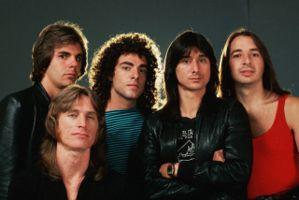
Journey back now to 1981: Charles and Di get hitched, baseball goes on strike, and Yes split up (don't worry, they'll be back). Amid all the hoopla, it's easy to miss the fact that the Reagan administration has given control of its budgetary policy to a small band of cranks and journalists, who have been pushing a free-lunch tax formula they call "supply-side" economics. President Reagan is seduced by the supply-siders' promise that he can pull off a seemingly impossible trifecta: cut taxes for the wealthy, spend more money to combat the 7 percent - and climbing - unemployment rate, and raise interest rates to stop inflation.
The central premise of supply-side is apparently that, by cutting marginal tax rates, the government can actually take in more tax revenue - since entrepreneurs will use the extra money on projects that will grow the economy. Reagan orders his budget director, David Stockman, to make the magic work. And Stockman goes to it with powerful enthusiasm and seemingly inexaustible self-confidence, ultimately convincing a skeptical Congress to give Reagan's tax-cutting budget the benefit of the doubt.
But the magic doesn't work after all. 1982 produces negative growth, unemployment continues to climb, and the Administration is embarrassed by Stockman's admission that the tax cut "was always a Trojan horse to bring down the top [tax] rate for the wealthy.... Supply-side is 'trickle-down' theory." By 1986 Stockman would be openly renouncing supply-side and declaring the 'Reagan revolution' a failure.
For more on the rise of the supply-siders, see this piece by Steve Kangas. What concerns us is the return of the supply-siders in the current administration. We knew that they were back, of course - it was supply-side theory that underpinned much of President Bush's argument for his first-term tax cuts. Now, with a fight shaping up in Congress over whether to renew the cuts, the trickle-downers are determined to convince us that they were right after all.
Larry Kudlow, praising Rudy Giuliani's endorsement of a flat tax (which endorsement was quickly rescinded), insisted that the Bush tax cuts had validated the Laffer Curve:
That last paper, by the Center for Budget and Policy Priorities, reinforces the point made in the CAP report: supporters of the tax cuts are dishonestly using the business cycle as cover for their claim that the cuts worked:
If you're really interested in the economic debates, check out Mark Thoma's recent post on the Bartlett piece, which turns into a fascinating exchange among Thoma, Bartlett, and Paul Krugman, who objects to Bartlett's mischaracterizations of Keynesianism (and, implicitly, to the notion that we're all supply-siders now). In a larger sense, there may be some definition problems as to who or what really represents supply-side thinking. But there's no question that the intense tax-cutting rhetoric of the economic right has lost none of its self-righteous fury, even in the face of deficits, inequality, and the plain facts.
L-R: Arthur Laffer, Robert Bartley, Irving Kristol, Steve Perry, Larry Kudlow.
Journey back now to 1981: Charles and Di get hitched, baseball goes on strike, and Yes split up (don't worry, they'll be back). Amid all the hoopla, it's easy to miss the fact that the Reagan administration has given control of its budgetary policy to a small band of cranks and journalists, who have been pushing a free-lunch tax formula they call "supply-side" economics. President Reagan is seduced by the supply-siders' promise that he can pull off a seemingly impossible trifecta: cut taxes for the wealthy, spend more money to combat the 7 percent - and climbing - unemployment rate, and raise interest rates to stop inflation.
The central premise of supply-side is apparently that, by cutting marginal tax rates, the government can actually take in more tax revenue - since entrepreneurs will use the extra money on projects that will grow the economy. Reagan orders his budget director, David Stockman, to make the magic work. And Stockman goes to it with powerful enthusiasm and seemingly inexaustible self-confidence, ultimately convincing a skeptical Congress to give Reagan's tax-cutting budget the benefit of the doubt.
But the magic doesn't work after all. 1982 produces negative growth, unemployment continues to climb, and the Administration is embarrassed by Stockman's admission that the tax cut "was always a Trojan horse to bring down the top [tax] rate for the wealthy.... Supply-side is 'trickle-down' theory." By 1986 Stockman would be openly renouncing supply-side and declaring the 'Reagan revolution' a failure.
For more on the rise of the supply-siders, see this piece by Steve Kangas. What concerns us is the return of the supply-siders in the current administration. We knew that they were back, of course - it was supply-side theory that underpinned much of President Bush's argument for his first-term tax cuts. Now, with a fight shaping up in Congress over whether to renew the cuts, the trickle-downers are determined to convince us that they were right after all.
Larry Kudlow, praising Rudy Giuliani's endorsement of a flat tax (which endorsement was quickly rescinded), insisted that the Bush tax cuts had validated the Laffer Curve:
Tax receipts have absolutely boomed in the aftermath of President Bush’s 2003 tax rate reduction package. That’s a fact. As a consequence, the budget deficit has fallen substantially. Moreover, at lower marginal tax rates there’s a good chance the budget will be balanced in the next year or two, despite chronic overspending.Speaking to the Heritage Foundation in January, Arthur Laffer celebrated Reagan's tax cuts - but didn't mention their failure to produce any actual economic benefit, nor the fact that Reagan's successors were forced to raise taxes again. (Read that Laffer lecture, by the way, if you want a window into the minds of people who openly revel in degraded minimum wages and declining unionization.) Meanwhile, Heritage Foundation analyst Brian Riedl has been striking back against what he calls "myths" about the Bush tax cuts. Riedl insists that the cuts were good for the economy:
[...]
The older I get, the more militant I become on this subject. Lower tax rates do expand the economic pie. Lower tax rates do boost revenues. Art Laffer had it right, and he’s got twenty-five years of pro-growth evidence to back him up.
Myth 9: The tax cuts haven't boosted the economy. Fact: The 2003 tax cuts lowered rates for income, capital gains and dividend taxes. Business investment, the stock market, job numbers and economic growth -- all of which had been stagnant -- immediately surged.The Center for American Progress, by contrast, reported in November that the US economy has been seriously underperforming when compared to similar points in previous business cycles:
According to proponents of Bush’s economic policies, the tax changes that reduced corporate income taxes and personal income tax rates were supposed to increase overall investment.Meanwhile, inequality has deepened, the tax code has become significantly more regressive (despite the claims of tax cut supporters), and the cost of extending the tax cuts would be staggering.
By this criterion, Bush’s economic policies have failed. Business investment typically recovers strongly after recessions, averaging over 20 percent on average at this point in the business cycle. Investment during the current cycle has only increased 7.7 percent, ranking as only the eighth most successful cycle out of the ten cycles since 1948. Business investment has under performed all past cycles since 1957.
That last paper, by the Center for Budget and Policy Priorities, reinforces the point made in the CAP report: supporters of the tax cuts are dishonestly using the business cycle as cover for their claim that the cuts worked:
Every recession in modern U.S. history has been followed by an economic expansion, regardless of whether taxes were cut, increased (as in the early 1990s), or left unchanged. The recent tax cuts were not responsible for the current recovery, just as the tax increases of 1990 and 1993 were not the reason the economy recovered from the downturn of the early 1990s, instead of remaining permanently stagnant.Some of the original supply-siders, meanwhile, are growing uncomfortable with the demons their political Pandora's box released. Bruce Bartlett, who has not been shy about denouncing the Bush administration, published an op-ed in the Times last week complaining that the original, more narrowly conceived supply-side concept has turned into a kind of unhinged tax-cut mania:
Moreover, compared with other post-World War II recoveries, the current recovery is not an exceptional one, and by some measures is well below average.
Today, supply-side economics has become associated with an obsession for cutting taxes under any and all circumstances. No longer do its advocates in Congress and elsewhere confine themselves to cutting marginal tax rates — the tax on each additional dollar earned — as the original supply-siders did. Rather, they support even the most gimmicky, economically dubious tax cuts with the same intensity.Bartlett argues that the original focus on carefully-targeted marginal tax cuts has been dumbed down into the mantra that, in President Bush's words, "You cut taxes and the tax revenues increase." According to Bartlett, the supply-siders never actually believed that cutting taxes would raise revenues: only that it wouldn't reduce revenues as much as Keynesian economists predicted it would. Bartlett insists that the supply-siders won, that Keynesianism has been discredited, that mainstream economists accept that high taxes limit economic growth - and that it's time to retire the old tax-cutting rhetoric, which is fighting battles that don't need to be fought.
If you're really interested in the economic debates, check out Mark Thoma's recent post on the Bartlett piece, which turns into a fascinating exchange among Thoma, Bartlett, and Paul Krugman, who objects to Bartlett's mischaracterizations of Keynesianism (and, implicitly, to the notion that we're all supply-siders now). In a larger sense, there may be some definition problems as to who or what really represents supply-side thinking. But there's no question that the intense tax-cutting rhetoric of the economic right has lost none of its self-righteous fury, even in the face of deficits, inequality, and the plain facts.
Labels: economic conservatives, supply-side, taxes
¶ Posted by Paul Curtis 9:52 AM 2 comments Monday, April 02, 2007
Last Rudy-Related Reading of the Day
I note the article because of how Fund observes the basic problem facing Rudy as the campaign continues (which is no doubt related to why Giuliani has tried to keep such a low profile thus far): reporters who are "bored with policy" are going to focus on the juicy stuff. Same old story - but lots more juice than usual.
But I'm not sure I quite follow Fund's logic. He recommends that the solution for Rudy is to talk more about policy - specifically about things like tax cuts and free trade:
It's a campaign day here at A&S. To round it out, here's an op-ed from John Fund at the Wall Street Journal on how Giuliani can try to deflect some of the many questions about his many scandals.
I note the article because of how Fund observes the basic problem facing Rudy as the campaign continues (which is no doubt related to why Giuliani has tried to keep such a low profile thus far): reporters who are "bored with policy" are going to focus on the juicy stuff. Same old story - but lots more juice than usual.
But I'm not sure I quite follow Fund's logic. He recommends that the solution for Rudy is to talk more about policy - specifically about things like tax cuts and free trade:
At his appearance before the Club for Growth, Mr. Giuliani showed an impressive command of facts and a clear understanding of how tax cuts are a vital component of economic growth. "I was impressed," Louis Woodhill, an investor from Houston, told me afterwards. But the Giuliani campaign wasn't self-confident enough to open the speech up so reporters could see for themselves how Mr. Giuliani smoothly handled questions about free trade and a federal court's recent decision upholding the Constitutional right of citizens to own guns. The faster the Giuliani campaign unwraps their man, the easier it will be for them to overcome questions about pals like Bernie Kerik and his hyperaggressive management style.I'm all for candidates talking about policy. But I don't see how defending the Laffer Curve is going to make the scandals go away. That kind of stuff may be exciting to Wall Street Journal writers and the Club for Growth, but it's not going to do much to thrill the public at large.
Labels: 2008, economic conservatives, Presidential election, Rudy Giuliani
¶ Posted by Paul Curtis 3:15 PM 0 comments Saturday, March 31, 2007
Laffer Curve to Infinity - And Beyond!
Above: The Earth as Viewed from Larry Kudlow
Larry Kudlow is the Last Supply-Sider, which is not as exciting as being the Last Starfighter, but involves nearly as much spaciness.
Anyway, if you're interested, here's Kudlow's take on the GOP presidential field. He is, of course, delighted by Rudy's recent flip-flop in favor of the flat tax. Kudlow only gets loopier as he gets older, and it seems he's happy to have a couple Republican candidates to keep him company:
It’s good to see that Republican presidential contenders are focusing on supply-side economics as a pro-growth strategy for their campaigns and presumably, for their presidential vision if elected.I dearly hope that Kudlow gets his way, and the 2008 GOP nominee ignores David Brooks and runs as a supply-sider.
The Wall Street Journal’s Kim Strassel tells the story in her “Tax Talk” column today. Having interviewed the “Big Three” candidates on CNBC’s Kudlow and Company, I agree with Ms. Strassel’s assessment that Mayor Giuliani and Governor Romney have developed the best tax strategies so far. Senator McCain remains a distant third.
Incidentally, Steve Forbes’ endorsement earlier this week of Rudy Giuliani is a significant development. Both Rudy and Romney have strong supply-side tax advisors in their camps. And if economist Kevin Hassett can convince Sen. McCain to slash corporate tax rates, that would surely give the Arizonan a much stronger economic growth platform.
Labels: 2008, economic conservatives, Larry Kudlow, Presidential election
¶ Posted by Paul Curtis 10:33 AM 0 comments Saturday, February 17, 2007
Along for the Conservative Crusades
As I've said repeatedly: economic conservatism does not provide a principle for governing, so it begets government without principles. I think that many of these conservative intellectuals would like to create a libertarian paradise, but their policy ideas, failing utterly to bring us any closer to such utopia, therefore serve only to clear the way for the raiders and the pillagers who follow the conservative standard they carry. The Crusades never had any hope of Christianizing the holy land, despite the fevered prayers of the true believers who promoted them - but they did provide a golden opportunity for those who mainly sought to rape, plunder, and destroy.
Interesting post at alicublog prompted by Professor Bainbridge's dismissal, for all intents and purposes, of the concept of shareholder control over corporate governance. Roy tries to square this with the conservative insistence on the primacy of taxpayers over government - the constant carping over how "big government" is squandering your money. And it occurs to him:
[F]or conservatives, to paraphrase Vince Lombardi, money isn't everything, it's the only thing. They strongly identify with corporations, and therefore endorse whatever hauls in the most money for them and their leaders -- populism be damned. Government isn't nearly so important to them -- not a lot of profit to be seen there -- except as the object of a hostile takeover, after which it can be plundered and sold off for parts, toward which end a little pretense at populism is acceptable (See Revolution, Republican).I agree and I disagree. Social issues aside, I think there is an outwardly honest ideological dimension to economic conservatism. Conservative intellectuals really do believe that their ideas are meant to advance individual freedom and prosperity - it's not just propaganda. The problem, I think, is more to do with their failure to be honest with themselves. Their extremist Milton Friedmanism is utterly unsuited to actual governing, and when conservatives have held the reins of government, not only have they failed to shrink its size, they have failed to provide any of the ancillary benefits their policy ideas are supposed to generate for ordinary people.
They're pretty obvious when they're propagandizing, but their true nature is never more clear than when they talk about the thing(s) they love.
As I've said repeatedly: economic conservatism does not provide a principle for governing, so it begets government without principles. I think that many of these conservative intellectuals would like to create a libertarian paradise, but their policy ideas, failing utterly to bring us any closer to such utopia, therefore serve only to clear the way for the raiders and the pillagers who follow the conservative standard they carry. The Crusades never had any hope of Christianizing the holy land, despite the fevered prayers of the true believers who promoted them - but they did provide a golden opportunity for those who mainly sought to rape, plunder, and destroy.
Labels: alicublog, economic conservatives
¶ Posted by Paul Curtis 2:00 PM 0 comments